Notes for people who build
Writing about vibe coding, AI dev tools, and turning ideas into products.
All posts
- The UX Design Manifesto · 8Behavior Is the Whirlpool of Cognition — How to Observe the InvisibleA user's cognition can never be observed directly. But wherever cognition goes astray, the user is bound to show behavior that differs from the norm. Through the shopping mall elevator and convenience store milk examples, we look at why observing behavior is the starting point of UX design.
- The Startup Prince · 4On the Risk of Scaling by Fortune Alone — Luck Opens the Door, Skill Holds the RoomThe final post in Part One of The Startup Prince. We examine the risk of mistaking growth carried by market tailwinds for one's own capability, borrowing Machiavelli's distinction between virtù and fortuna.
- React — Web Development from Start to Deploy · 7useRef — Remembering a Value Without Touching the ScreenA look at useRef, which unlike State doesn't trigger a re-render when it changes. How it differs from a plain variable and a module-level let, why you shouldn't read or write it during render, and its most common use — reaching into the DOM.
- React — Web Development from Start to Deploy · 6The useEffect Cleanup Function — the Art of Undoing What You Turned OnWhen and why useEffect's cleanup function runs, laid out as a lifecycle. Including the real reason behind the commonly-misunderstood 'double run in development' (StrictMode).
- React — Web Development from Start to Deploy · 5useEffect — Handling the Work Outside RenderingA look at React's useEffect, starting from the concept of a 'side effect.' How it differs from rendering, when each of the three dependency-array forms runs, and the common misunderstandings.
- React — Web Development from Start to Deploy · 4State and useState — the Value a Component Remembers on Its OwnA look at React's State in contrast to Props. Why a plain variable won't do, why you receive useState as a const, and why you must always change the value through the setter.
- React — Web Development from Start to Deploy · 3Props — the Attributes a Parent Hands to a ChildA look at React's Props framed against HTML attributes. How they act like function arguments, destructuring, children, and why the rule 'Props are read-only' exists at all.
- React — Web Development from Start to Deploy · 2JSX — It Looks Like HTML, but It's Actually JavaScriptA close look at JSX, the syntax React uses to describe the screen. Why it resembles HTML yet differs, what the curly braces do, and why you write className instead of class — framed against your web experience.
- React — Web Development from Start to Deploy · 1What Is React? — Declarative UI and the Idea of ComponentsWhat problem did React set out to solve, and why does the shift 'from imperative to declarative' matter so much? A look at React's core idea, framed against your web-development experience.
- The UX Design Manifesto · 7How to Put Cognition to Work in Design — and the Quiet Persuasion of AffordanceWe look at what the three cognitive processes of selective attention, association, and mental models mean for actual design, and go on to examine affordance — the concept that guides user behavior through the unconscious.
- The Startup Prince · 3On the Risk of a Business Built on Contact Points — When the Founder's Network Is the Revenue StructureThe third post in The Startup Prince. We look at why early revenue built on a founder's personal relationships rarely lasts, borrowing the story of Cesare Borgia — who could not hold power built on borrowed strength.
- Vibe Coding for Everyone · 8Putting Your App Out into the World — A Vibe Coder's First Steps in DeploymentLearn how to take an app that only ran locally and deploy it to the internet, step by step from the start.
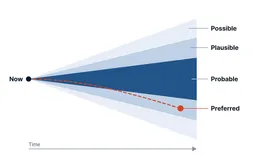 What is Speculative Design · 1Speculative Design: Designing the Preferred FutureMore than forecasting the future, speculative design proposes a better path for society as a whole. A look at the concept and its design direction.
- Vibe Coding for Everyone · 7Prompt Engineering — Getting Exactly What You Want from the AIPractical skills for writing good prompts — specificity, context, and scope, plus five techniques for getting the result you're after.
- The UX Design Manifesto · 6Inside the User's Mind, the Iceberg of Cognition — Selective Attention, Chunking, and Mental ModelsUser experience is ultimately completed inside the user's mind. Using the iceberg as a metaphor for cognition, we examine three cognitive processes at work beneath the surface: Selective Attention, Chunking, and Mental Model.